
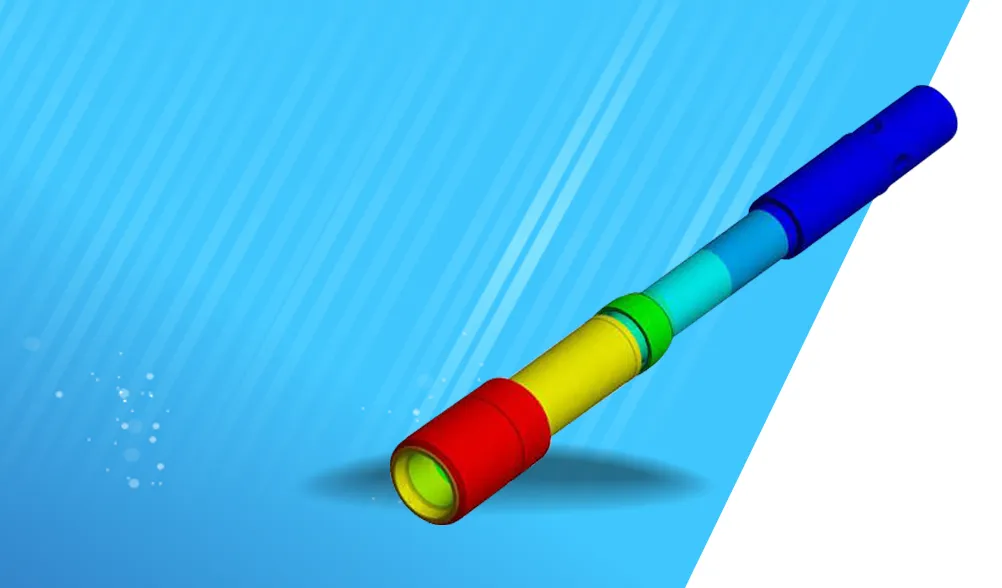
Engineering teams are under constant pressure to deliver safer, lighter, and more reliable products while keeping development costs under control. Traditional design approaches often rely on multiple prototypes and late-stage testing, which can slow progress and increase risk. Simulation-led development has changed this landscape, and Finite Element Analysis plays a central role in that transformation. This article explores how fea services support smarter engineering design, reduce uncertainty, and help organizations make confident technical decisions.
Finite Element Analysis Made Easy to Understand
Finite Element Analysis is a numerical technique used to evaluate how products and structures behave under real-world conditions. Engineers divide complex geometries into smaller elements, making it possible to calculate stresses, strains, deformations, and other responses with high accuracy. This approach allows teams to understand performance limits before manufacturing begins.
Why Engineering Teams Rely on FEA Services
Modern products must meet strict performance and safety requirements. FEA services help engineers evaluate these requirements early in the design phase. By simulating operating conditions virtually, potential weaknesses are identified before physical testing. This early insight reduces design iterations, minimizes risk, and supports faster development cycles.
Key Analysis Capabilities Within FEA Services
Professional FEA services include multiple analysis methods designed to address a wide range of engineering challenges.
Linear Analysis for Basic Strength Validation
Linear analysis examines how a structure responds to loads within the elastic range of materials. It is commonly used for initial checks to ensure that stresses and deformations remain within acceptable limits under normal operating conditions.
Nonlinear Analysis for Complex Behavior
When components experience material yielding, large deformations, or changing contact conditions, nonlinear analysis becomes essential. This method captures real-world behavior more accurately, making it critical for safety-critical or high-load applications.
Fatigue Analysis for Durability Assessment
Many engineering failures occur due to repeated loading rather than a single overload. Fatigue analysis predicts how components perform over time by evaluating cyclic stresses and damage accumulation. This helps engineers design products that meet durability and lifecycle expectations.
Buckling Analysis for Stability Evaluation
Buckling analysis assesses the risk of sudden instability in slender or thin-walled structures under compressive loads. Identifying critical load thresholds ensures structural safety and prevents unexpected failures.
Importance of Skilled FEA Analysis Services
Simulation accuracy depends on more than software tools. fea analysis services delivered by experienced engineers ensure correct assumptions, realistic boundary conditions, and proper interpretation of results. Skilled analysts understand how to refine models and correlate simulations with real-world behavior, turning data into actionable engineering insights.
Where FEA Services Deliver the Most Value
FEA services are used across many industries, including automotive, aerospace, construction, industrial equipment, and consumer products. Automotive engineers rely on FEA to improve durability and safety. Aerospace teams use it to balance weight reduction with strict strength requirements. Manufacturers apply FEA to optimize machines, tooling, and structural components.
Cost and Time Savings Through Virtual Simulation

One of the most significant advantages of FEA services is cost efficiency. Virtual testing reduces the number of physical prototypes required, saving material, labor, and time. Design issues can be resolved early, preventing expensive redesigns and production delays later in the project.
What to Consider When Choosing an FEA Partner
Selecting the right FEA service provider is a strategic decision. Look for partners with strong engineering fundamentals, industry-specific experience, and a structured analysis workflow. Clear documentation, validated results, and transparent communication are essential for building trust in simulation outcomes.
Supporting Continuous Improvement With FEA
FEA is not limited to initial product development. Simulation data can be reused for design updates, failure investigations, and future product variants. Over time, this creates a valuable knowledge base that improves consistency and decision-making across engineering teams.
Conclusion
Comprehensive FEA services are essential for modern engineering design. By combining advanced analysis techniques with expert interpretation, FEA enables accurate performance prediction, reduces development risk, and improves product reliability. Organizations that integrate FEA early in the design process benefit from faster development, lower costs, and stronger engineering confidence.
Frequently Asked Questions
What is the primary benefit of using FEA services?
The primary benefit is the ability to predict real-world performance early, helping engineers optimize designs and avoid costly failures.
How do FEA services support design optimization?
They allow engineers to compare multiple design options virtually, identify weaknesses, and refine geometry or materials before production.
Are FEA services suitable for both simple and complex designs?
Yes, FEA services are effective for simple components as well as complex assemblies where traditional calculations are not sufficient.
