
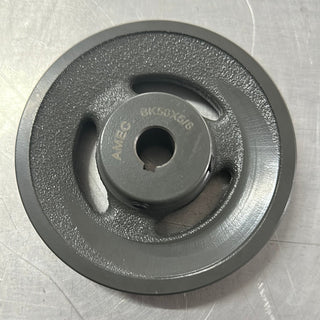
Understanding the Role of Pulleys in Industrial Operations
A pulley is a fundamental mechanical component used to transmit power and motion between shafts through a belt, rope, or cable. In industrial environments, pulleys are widely used to improve efficiency, reduce manual effort, and optimize machinery performance. By changing the direction of force or multiplying it, pulley systems enable heavy loads to be lifted or moved with minimal energy input. This makes them essential in sectors such as manufacturing, mining, construction, agriculture, and material handling.
In modern facilities, pulleys are often integrated with electric motors, gearboxes, and drive systems to create smooth, controlled motion. Their simplicity, durability, and versatility allow them to function effectively in both small-scale and large-scale operations. When combined with advanced industrial solutions provided by companies like Denron Industrial in Jamaica, pulley systems become part of a larger ecosystem that ensures operational continuity and efficiency.
Types of Pulleys Used in Industrial Settings
There are several types of pulleys designed to meet specific operational requirements. Fixed pulleys are commonly used to change the direction of force without altering its magnitude, making them suitable for lifting applications. Movable pulleys, on the other hand, reduce the effort required by distributing the load across multiple rope segments. Compound pulley systems combine both fixed and movable pulleys to significantly reduce the force needed to lift heavy objects.
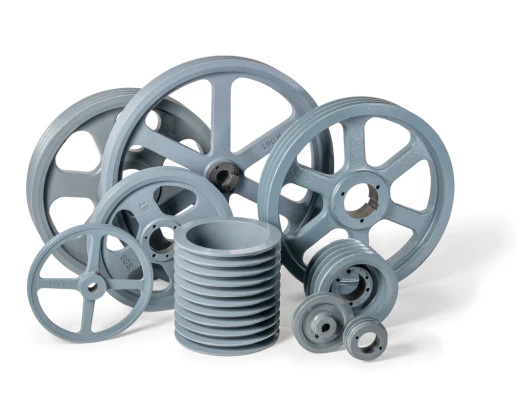
In industrial machinery, specialized pulleys such as V-belt pulleys and timing pulleys are widely used. V-belt pulleys provide strong frictional grip and are ideal for transmitting power between shafts over moderate distances. Timing pulleys, paired with toothed belts, ensure precise synchronization between components, which is critical in automated systems and precision equipment. These variations allow industries to select pulley systems tailored to their specific mechanical and operational needs.
Applications of Pulley Systems Across Industries
Pulley systems are integral to a wide range of industrial applications. In manufacturing plants, they are used in conveyor systems to transport materials efficiently across production lines. In construction, pulleys are essential in cranes and hoists for lifting heavy loads safely. Agricultural machinery also relies on pulley mechanisms for tasks such as irrigation, threshing, and harvesting.
In addition, pulley-driven systems are commonly found in HVAC systems, elevators, and water pumping stations. When paired with high-quality electric motors and drives—such as those supplied by WEG through authorized distributors like Denron Industrial—pulleys help maintain consistent torque, reduce mechanical stress, and improve energy efficiency. This integration ensures that industrial operations remain smooth, reliable, and cost-effective.
Advantages of Using Pulley Systems in Industrial Equipment
One of the primary advantages of pulley systems is their ability to reduce the effort required to move heavy loads. By distributing force across multiple components, pulleys minimize strain on machinery and operators alike. This leads to improved safety and reduced risk of equipment failure. Additionally, pulleys contribute to energy efficiency by optimizing the transmission of power between components.
Another key benefit is their adaptability. Pulley systems can be configured in various arrangements to suit different applications, making them highly versatile. They are also relatively easy to install, maintain, and replace, which reduces downtime in industrial environments. When supported by reliable suppliers like Denron Industrial, businesses gain access to durable pulley components that meet high-performance standards and align with modern industrial demands.
Maintenance and Performance Optimization of Pulley Systems
Proper maintenance is essential to ensure the longevity and efficiency of pulley systems. Regular inspection of belts, alignment, and tension helps prevent slippage and uneven wear. Misaligned pulleys can lead to vibration, noise, and premature failure of components, making alignment checks a critical part of routine maintenance. Lubrication of moving parts, where applicable, also plays a role in minimizing friction and heat buildup.
Industries often rely on expert technical support to maintain their equipment. Suppliers like Denron Industrial provide not only high-quality products but also guidance on installation, troubleshooting, and system optimization. This level of support ensures that pulley systems operate at peak efficiency, contributing to uninterrupted production and reduced operational costs.
Integration of Pulleys with Modern Drive Systems
With advancements in industrial automation, pulley systems are increasingly integrated with variable frequency drives, gearboxes, and advanced motor technologies. This integration allows for precise control of speed, torque, and motion, which is essential in complex industrial processes. Pulley-driven systems can be fine-tuned to match specific load requirements, improving both performance and energy consumption.
By combining pulleys with advanced components supplied by trusted providers like WEG and distributed through Denron Industrial, industries benefit from enhanced reliability and scalability. These systems are particularly valuable in applications where consistent operation and adaptability are critical, such as automated production lines and heavy-duty machinery.
Conclusion
Pulley systems remain a cornerstone of industrial mechanics due to their simplicity, versatility, and effectiveness in transmitting power. From basic lifting tasks to complex integrated machinery, pulleys play a vital role in enhancing operational efficiency and reducing manual effort. When paired with high-quality motors, drives, and control systems, they become part of a comprehensive solution that supports modern industrial demands.
